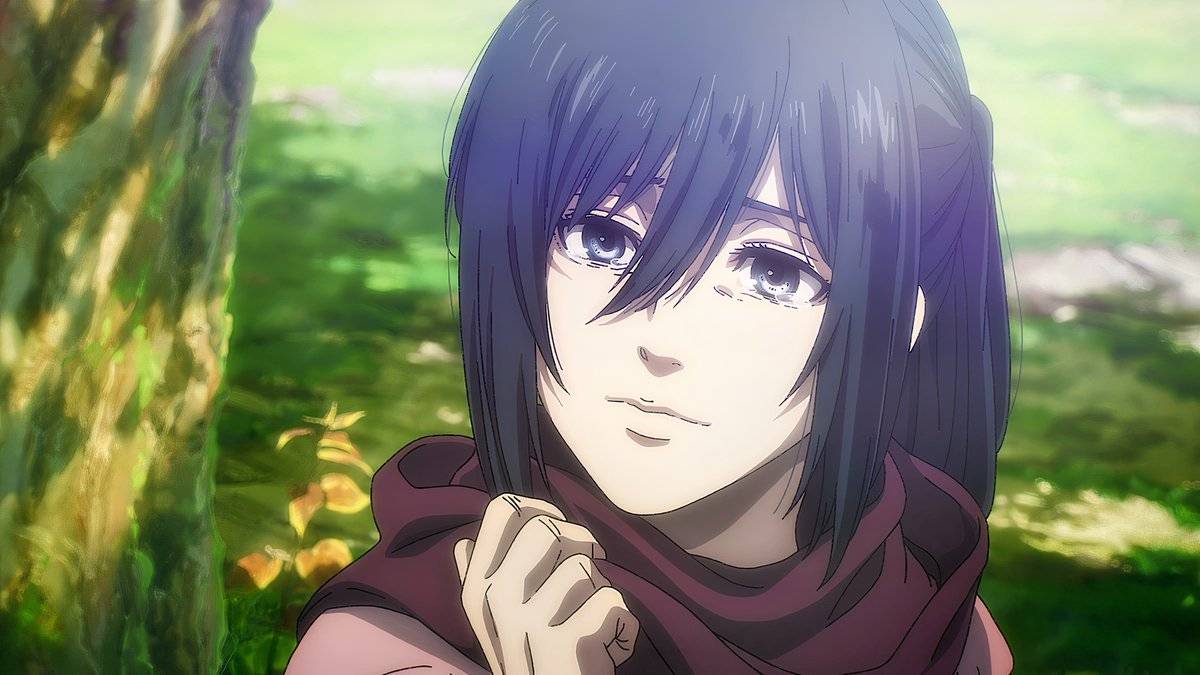
Hajime Isayama’s Attack on Titan stands as a remarkably layered exploration of systemic hatred and the heavy toll of sacrifice. What begins as a tense, high-stakes narrative about humanity fighting for survival against flesh-eating Titans gradually blossoms into a vast conspiracy driven by the intricate choices of Eren Yeager. Showcasing one of the finest hero-to-villain trajectories in modern fiction, Eren’s descent feels thoroughly earned, elevating the entire saga.
Even so, the conclusion of Attack on Titan has always sparked fierce debate. The initial manga finale met with considerable pushback, prompting Isayama to include eight additional pages to offer a more rounded resolution. While this extended version and the subsequent anime adaptation—which provides much-needed context—were received more warmly, certain elements of the grand finale still feel uneven. Though Isayama always aimed for a bittersweet farewell, a few abrupt character turns in the eleventh hour recast earlier parts of the journey in a questionable light.
The creator himself has openly voiced mixed feelings about the controversial wrap-up. Reflecting on the final panels displayed at a museum exhibit in Hita City, Japan, Isayama noted that his deep empathy for Eren may have compromised the narrative’s integrity, leaving him with a lingering sense of ins sincerity. Whether viewers share that critique, it is undeniable that Attack on Titan concludes on a note that is as flawed as it is fascinating.
For those looking for narratives that nail their landing with absolute conviction and emotional payoff, here are 10 anime with endings that deliver greater coherence and catharsis.
Note: The following sections contain spoilers for the anime series mentioned.
1. Fullmetal Alchemist: Brotherhood
Fullmetal Alchemist is that rare masterwork where the conclusion honors and amplifies its core themes with seamless precision. Following brothers Edward and Alphonse Elric as they pay a devastating physical price for a forbidden ritual, the series chronicles a grueling quest that culminates in Edward truly grasping the principles of Equivalent Exchange and the true value of sacrifice.
The final stretch is nothing short of exemplary, bringing down the series antagonist, Father, in a manner that directly reflects the show’s philosophical heart. Furthermore, every companion who stood by Edward gets a chance to heal their inner wounds and fulfill their personal arcs. It is a masterclass in thematic closure, featuring rich character development and a profoundly satisfying resolution that leaves no loose ends dangling.
2. Takopi’s Original Sin
Told across a mere six emotionally gut-wrenching episodes, Takopi’s Original Sin centers on a troubled young girl named Shizuka and an alien who crash-lands on Earth whom she names Takopi. As the alien tries to bring joy to Shizuka’s life, he slowly uncovers the severe, hidden abuse and bullying she suffers in silence.
Crucially, the story refuses to offer a naive, magical fix for systemic trauma. Takopi eventually comes to understand that his "happy gadgets" cannot mend deep-seated emotional scars, and that children like Shizuka must navigate their pain through genuine human connection and self-acceptance. It is a realistic, bittersweet conclusion for a story that flirts with the fantasy of magical escapism only to ground itself in the hard truth that running away is merely a temporary patch.
3. Code Geass: Lelouch of the Rebellion
Code Geass tracks the turbulent path of exiled prince Lelouch vi Britannia, who adopts a merciless alter-ego after gaining the power of Geass—an ability that lets him bend anyone to his absolute will. The brilliance of its finale hinges on the "Zero Requiem" twist: Lelouch deliberately paints himself as a global tyrant so the entire world can unite against a single common enemy.
The payoff is monumental, culminating in his childhood friend Suzaku Kururugi assassinating him while stepping into the mantle of Zero. This ultimate sacrifice shatters the cycle of perpetual war, paving the way for a gentler world for characters like Nunnally. Lelouch’s demise not only deepens the moral ambiguity of his journey, but also brings his guiding philosophy—that only those prepared to die should ever kill—to a poetic, full-circle close.
4. Gurren Lagann
At its core, Gurren Lagann is a celebration of shattering impossible boundaries. The story starts with a young, outcast boy named Simon breaking through the ceiling of his underground village, only to find a surface world locked in endless conflict. This sparks a legendary crusade alongside his comrade Kamina against the tyrannical Spiral King, ultimately teaching Simon that unchecked, infinite power threatens to fracture reality itself.
Rather than ascending to godhood to resurrect the fallen, Simon hands his Core Drill to Gimmy, gracefully passing the torch to the next generation. There is immense comfort in this gesture, as the series champions a future unchained by the ghosts of yesterday. Grief may be an insurmountable mountain, but it can be conquered once we recognize that tomorrow is a shared duty rather than a solitary cross to bear.
5. Cowboy Bebop
Cowboy Bebop delivers one of the most poignant and tragic thematic resolutions in animation history. The effortlessly detached Spike Spiegel is finally cornered by his past, forcing a fatal showdown with Vicious and the Red Dragon Syndicate—the very life he thought he had successfully escaped.
Spike’s end avoids cheap shock value, serving instead as the inevitable reckoning for the profound heartbreak he carried ever since the presumed death of Julia. Up until this point, Spike treated reality like a waking dream, adopting a detached "whatever happens, happens" philosophy to numb his pain. That defense mechanism shatters when he realizes he must face Vicious head-on to find closure. The final, lingering text—"You’re gonna carry that weight"—resonates deeply, reminding viewers that the crew he left behind must somehow keep pressing forward despite bearing an unimaginable loss.
6. Sonny Boy
The finale of Sonny Boy might feel disorienting if approached with conventional expectations, but it is pitch-perfect for an anime that thrives on experimental, non-linear storytelling. Rather than playing out like a traditional sci-fi adventure about middle schoolers stranded in alternate dimensions, the series skips past grand spectacles to focus heavily on the psychological aftermath of its characters.
The reality awaiting the students back on Earth is far from idealized, yet the story champions the quiet dignity of everyday mundanity and the difficult hurdles of growing up. There is a quiet, resilient optimism in how Nagara and Mizuho choose to face adulthood with mindfulness and agency. The road ahead won’t be simple, but these youths are no longer trapped in passive drift, having learned that change is the only constant they can rely on.
7. Mob Psycho 100
Shigeo “Mob” Kageyama maintains a comically deadpan expression for the vast majority of Mob Psycho 100, largely because he has spent his entire life burying his overwhelming emotions. Even as he learns to open up and build meaningful friendships, his accumulated emotional suppression threatens to erupt as "???%", a destructive entity capable of wiping out everything in its path.
Discarding typical shonen tropes, the series delivers an unorthodox final arc where our overpowered protagonist learns to embrace the messiest, most flawed parts of himself rather than seeking an instant, magical cure. Trauma cannot simply be wished away overnight, and the series honors that truth by emphasizing that healing is an ongoing journey. The closing image of Mob laughing unreservedly remains one of the most life-affirming conclusions ever put to screen for a story about young people learning to navigate the world with radical empathy.
8. Akudama Drive
In the neon-drenched dystopia of Akudama Drive, a group of elite, highly specialized criminals known as Akudama are anonymously tasked with springing a death-row inmate named Cutthroat before his execution. What starts as a high-stakes heist quickly spirals into a massive, city-wide conspiracy.
This breakneck thriller wraps up with a devastatingly poignant message, allowing characters like Swindler to find true purpose by standing up to a corrupt, oppressive state. The ultimate villain is the governing regime itself, which pulls the strings of societal violence through ruthless policing and systemic control. In a fascinating twist, the chaotic Akudama function as unlikely agents of justice willing to break every law to protect the innocent. It is a brutal, heart-wrenching finale that stays entirely faithful to the harsh reality of rebels sacrificing everything to ignite an uprising.
9. Neon Genesis Evangelion
Neon Genesis Evangelion is a franchise that seemingly refuses to end permanently, having concluded in multiple distinct ways across its television run, films, and manga adaptations. Yet, every single ending feels completely earned by the psychological buildup that preceded it.
The original 1996 television finale takes an abstract, internal route, with Shinji Ikari confronting his deepest fears to realize that true human connection requires radical vulnerability. The End of Evangelion tackles the same themes through an apocalyptic lens, plunging the Human Instrumentality Project into terrifying reality while Shinji ultimately rejects comforting illusions in favor of painful truth. Finally, Evangelion: 3.0+1.0 Thrice Upon a Time offers the most peaceful and hopeful resolution of all, allowing Shinji and his peers to step into a world free of Evangelions entirely. Whichever version resonates most, the franchise understands the chaotic spectrum of human emotion like few others.
10. Steins;Gate
The time-travel mechanics in Steins;Gate are far more airtight and sophisticated than typical sci-fi fare, and its conclusion reinforces both the narrative’s internal logic and its emotional core. After attending a seminar on temporal displacement, protagonist Rintaro Okabe finds his life turned upside down when Kurisu Makise is inexplicably murdered.
The eventual resolution feels immensely cathartic because it is hard-fought; the complex time loops close cleanly while allowing Rintaro to achieve genuine emotional maturity. Because the series treats causality with strict weight and consequence, the price of finally reaching the true timeline is unimaginably high. No shortcuts or cheap sacrifices are used to artificially advance the plot, allowing the story to land on a note that feels profoundly earned and deeply satisfying.